29.9.09

18.8.09


5.8.09
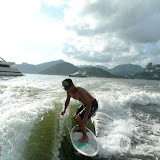
How to Wake Surf
extracted from www.waterskis.com
Wake surfing is one of the most exciting and challenging sports to do behind your boat. Because a boat can provide you an endless wave on which to practice and hone your skills it is rapidly becoming one of the most popular board sports for inboard owners across the globe. No longer is surfing relegated to only those in coastal areas, wake surfing has unlocked this epic sport for anyone with access to water.
Equipment, Technique, And All The Rest
Wake surf board- It's best to use a board designed specifically for the unique shape of a boat wake for wake surfing. Many people have tried to use old surfboards (including myself) usually leading to fairly mediocre results. In order to begin, learn and progress it is important to use equipment that is designed for wake surfing.
Wake surfing rope / handle- Wake surf ropes are much thicker than wakeboard ropes because you may need to hold on to the rope to pull yourself into the sweet spot of the wake. Wakeboard ropes are thin, hard to hold on to and can wrap around your hands and arms creating a dangerous situation. Wake surfing is all about having fun, so keep it safe and everybody will have a better time.
Boat- Only wake surf behind an inboard boat. Inboard boats have the propeller tucked up underneath the transom of the boat creating a safe platform for wake surfing. Outboard and inboard/outboard boats have an exposed propeller, which is a very serious safety concern for the rider.
Weighting your boat- Wake surfing usually requires additional weight on the side of the boat you intend to surf (most people surf on the port/left side). Normally, adding weight in the rear of the boat will help you create a wake, which is suitable for surfing. Each and every boat is different, so experiment with weight placement and the amount of weight. NEVER exceed your manufactures maximum weight guidelines. Those numbers are there for a reason, so obey them.
Driving the boat- When pulling up a wake surfer, you should accelerate even slower than a wake boarder. Boat speed will vary with make, model and amount of weight but usually around 10mph is ideal. The boat should create a clean and crisp wake, you wouldn't want to surf a mushy wave would you? Drive the boat straight, not in a circle.
Getting up- When getting up you should lie on your back and bring your knees to your chest, much like getting up on a wakeboard. Allow the surf board to float naturally and keep it at a 90 degree angle to you and the boat with the nose of the board facing away from the boat. Place your feet on the board so that your heels rest on the board and your toes are pointing up. Depending on the board your back foot should be somewhere around a foot from the back of the board. Your feet should be shoulder-width apart.
When the boat accelerates and the rope tightens up, put pressure on your heels, which will flip the board up to meet your feet. Once you bring the board to your feet, keep your arms straight out in front of you and keep your knees sucked up to your chest. Resist the urge to stand up to quickly as this can cause you to be unstable. Once you are out of the water and the board is on plane, stand up with a bit of a knees bent stance so that you are balanced on the board.
Edge the board away from the boat and the wake so you can get your balance and adjust your feet. Depending on which side of the boat you are riding and which foot forward you use, you will want to adjust your feet so that your toes (regular riders and left side of the boat) or your heels (goofy riders on the left side of the boat) are closest to the edge of the board which is closest to the wake. This will allow you to keep the board in the side of the wave. Once you have moved your feet, gradually edge towards the wake. Once at the wake, use the wake surf rope to position your self in the pocket. This is the area of the wake that generates power and momentum, keeping you moving with the boat.
You can generate speed and momentum by applying weight to your front foot. On the flip side you can decelerate your board by applying pressure to your back foot. Mastering this technique is crucial to being able to stay in the pocket and riding the endless wave.
Once you are comfortable with staying in the pocket, throw the rope to somebody in the boat. After all this is wake surfing, not wake towing!
Wake surfing is one of the most exciting and challenging sports to do behind your boat. Because a boat can provide you an endless wave on which to practice and hone your skills it is rapidly becoming one of the most popular board sports for inboard owners across the globe. No longer is surfing relegated to only those in coastal areas, wake surfing has unlocked this epic sport for anyone with access to water.
Equipment, Technique, And All The Rest
Wake surf board- It's best to use a board designed specifically for the unique shape of a boat wake for wake surfing. Many people have tried to use old surfboards (including myself) usually leading to fairly mediocre results. In order to begin, learn and progress it is important to use equipment that is designed for wake surfing.
Wake surfing rope / handle- Wake surf ropes are much thicker than wakeboard ropes because you may need to hold on to the rope to pull yourself into the sweet spot of the wake. Wakeboard ropes are thin, hard to hold on to and can wrap around your hands and arms creating a dangerous situation. Wake surfing is all about having fun, so keep it safe and everybody will have a better time.
Boat- Only wake surf behind an inboard boat. Inboard boats have the propeller tucked up underneath the transom of the boat creating a safe platform for wake surfing. Outboard and inboard/outboard boats have an exposed propeller, which is a very serious safety concern for the rider.
Weighting your boat- Wake surfing usually requires additional weight on the side of the boat you intend to surf (most people surf on the port/left side). Normally, adding weight in the rear of the boat will help you create a wake, which is suitable for surfing. Each and every boat is different, so experiment with weight placement and the amount of weight. NEVER exceed your manufactures maximum weight guidelines. Those numbers are there for a reason, so obey them.
Driving the boat- When pulling up a wake surfer, you should accelerate even slower than a wake boarder. Boat speed will vary with make, model and amount of weight but usually around 10mph is ideal. The boat should create a clean and crisp wake, you wouldn't want to surf a mushy wave would you? Drive the boat straight, not in a circle.
Getting up- When getting up you should lie on your back and bring your knees to your chest, much like getting up on a wakeboard. Allow the surf board to float naturally and keep it at a 90 degree angle to you and the boat with the nose of the board facing away from the boat. Place your feet on the board so that your heels rest on the board and your toes are pointing up. Depending on the board your back foot should be somewhere around a foot from the back of the board. Your feet should be shoulder-width apart.
When the boat accelerates and the rope tightens up, put pressure on your heels, which will flip the board up to meet your feet. Once you bring the board to your feet, keep your arms straight out in front of you and keep your knees sucked up to your chest. Resist the urge to stand up to quickly as this can cause you to be unstable. Once you are out of the water and the board is on plane, stand up with a bit of a knees bent stance so that you are balanced on the board.
Edge the board away from the boat and the wake so you can get your balance and adjust your feet. Depending on which side of the boat you are riding and which foot forward you use, you will want to adjust your feet so that your toes (regular riders and left side of the boat) or your heels (goofy riders on the left side of the boat) are closest to the edge of the board which is closest to the wake. This will allow you to keep the board in the side of the wave. Once you have moved your feet, gradually edge towards the wake. Once at the wake, use the wake surf rope to position your self in the pocket. This is the area of the wake that generates power and momentum, keeping you moving with the boat.
You can generate speed and momentum by applying weight to your front foot. On the flip side you can decelerate your board by applying pressure to your back foot. Mastering this technique is crucial to being able to stay in the pocket and riding the endless wave.
Once you are comfortable with staying in the pocket, throw the rope to somebody in the boat. After all this is wake surfing, not wake towing!
19.6.09


25.5.09
How to do get air in wakesurf
Just read a post in Wakeworld forum, I think it's readlly helpful:
James will start at the back of the pocket, typically his rear foot is in the curl. Then depending upon the pocket length and where the most crisp part of the wake FORWARD is, he'll pump once or twice so that he can hit that. Some wakes will have a rounded face before the top of the spine and that isn't a good launch spot. Focus on where the wake is it's sharpest and most forward.
Then James turns up and into that spot. From that point on, it's a skateboard ollie. Pull the front foot up and push down on the rear foot. The height of your air is going to be dependent upon how high you can pull that front foot up.
At the height of your pull your rear foot up to meet the height of your front foot. This is where you'll want a board that releases well of the wake.
If you look at the trough in the pictures you can estimate where James is starting from and also get an idea where he is projecting off the lip. In that second picture you can see how James is pulling that front foot up - he'll try and get that knee up towards his chest.
[the post with some pics, however, becoz the right of the photographer, I 'll not post them here. I find a video in youtube, the performer is also James ]
James will start at the back of the pocket, typically his rear foot is in the curl. Then depending upon the pocket length and where the most crisp part of the wake FORWARD is, he'll pump once or twice so that he can hit that. Some wakes will have a rounded face before the top of the spine and that isn't a good launch spot. Focus on where the wake is it's sharpest and most forward.
Then James turns up and into that spot. From that point on, it's a skateboard ollie. Pull the front foot up and push down on the rear foot. The height of your air is going to be dependent upon how high you can pull that front foot up.
At the height of your pull your rear foot up to meet the height of your front foot. This is where you'll want a board that releases well of the wake.
If you look at the trough in the pictures you can estimate where James is starting from and also get an idea where he is projecting off the lip. In that second picture you can see how James is pulling that front foot up - he'll try and get that knee up towards his chest.
[the post with some pics, however, becoz the right of the photographer, I 'll not post them here. I find a video in youtube, the performer is also James ]
21.5.09
5.12 長隆水上樂園

第一次跟朋友去長隆水上樂園, 除左舟車勞動之外, ( 即日來回坐車差不多要 5、6 小時! ) 感覺都好好. 遊戲新穎, 比以前海馬公園既水上樂園創新, 咁又係, 海馬公園既水上樂園都已經係集體回憶. 呢個水上樂園有幾個遊戲都好好玩, " 大喇叭", "大湯碗" 都好新, 有 d 離心位係估佢唔到既, 所以就更刺激.
不過除左玩, 有時睇到內地人同香港人既文化差異就更特別. 例如衣著: 香港人男的就著 boardshorts, 內地人就著超貼身泳褲, 有的甚至孖煙通等; 女的就著帶有裙邊泳衣, 最大的差別就係腋下的毛髮... 我想大多香港女仔都會剃掉腋毛, 不過內地的就個個夾住兩隻鮑魚擦出來, 都幾好笑. 我不是想笑內地人落後, 其實以前去海馬公園既水上樂園 d 香港人咪一樣係咁, 只不過潮流在變, 人又在變. 當香港人去到日本, 日本的人都可能在笑香港女仔為甚麼個個都素顏出街, 一 d 都唔識打扮, same same!

28.3.09


24.3.09
Snowboarding 2009 @ Shiga Kogen 志賀高原
Damage 14 - Let's do some damage!
因為我們一伙十四人; 因為其中一個成日講 " Let's do some damage!" ; 又因為這句說話喚醒了一班 "佬" 變 "頑童" - 所以 " Damage 14 " 就成了我們的隊名.
因為我們一伙十四人; 因為其中一個成日講 " Let's do some damage!" ; 又因為這句說話喚醒了一班 "佬" 變 "頑童" - 所以 " Damage 14 " 就成了我們的隊名.


訂閱:
文章 (Atom)


